

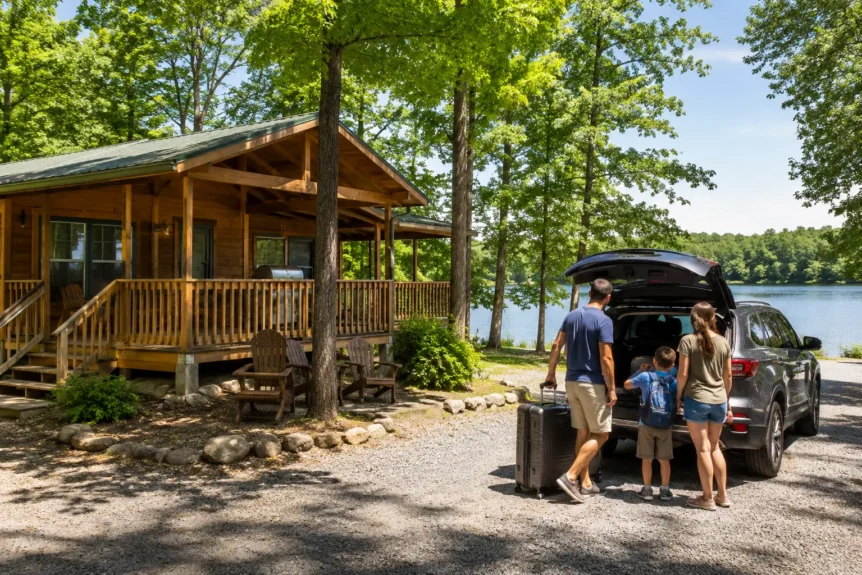
Glamping (short for glamorous camping) is an outdoor stay where the accommodation is pre-built and ready on arrival: a real bed, an enclosed structure, electricity, and usually a fire pit or grill outside. No tent to pitch, no sleeping bag required, no camping experience necessary. The experience starts when you arrive.
New Jersey is one of the strongest locations in the northeast for this kind of trip. Within an hour of New York City, the state’s northwest highlands combine private lakes, wooded terrain, and full-service resorts with built-in activity programming, the kind of setup that turns a cabin stay into a complete weekend away.
This guide covers what glamping actually delivers, what separates a resort from a standalone cabin in the woods, and what to know before booking in northern New Jersey.
Glamping vs. Camping: What actually changes
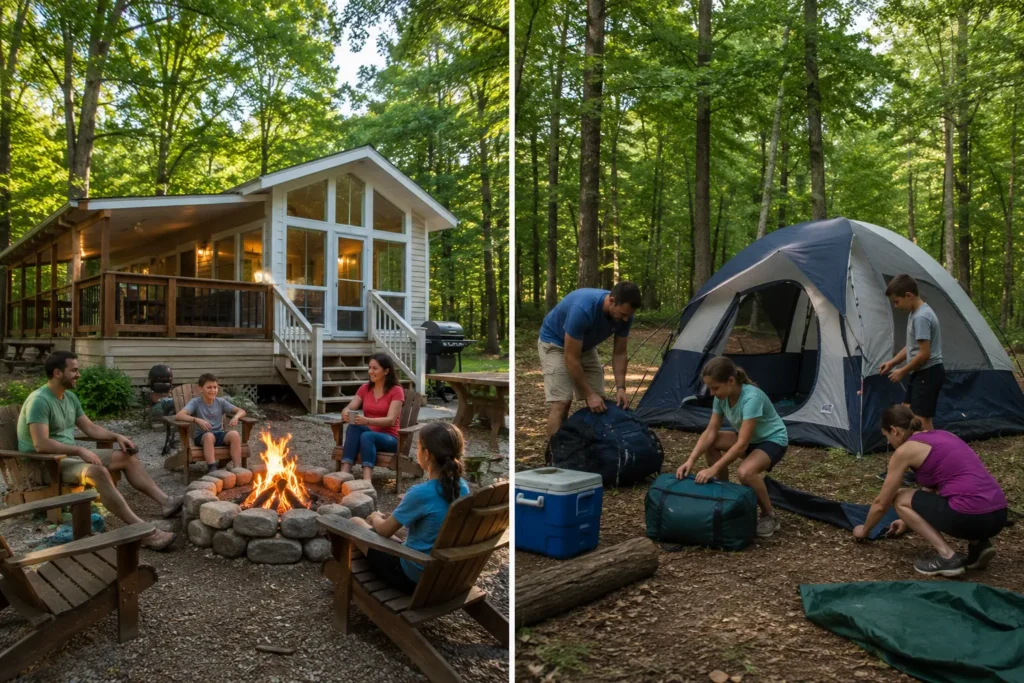
What is the difference between glamping and camping? The core difference is setup. Traditional camping requires you to bring and build everything: a tent, a sleeping system, cooking gear, and lighting. Glamping provides the structure and key amenities already in place. You arrive, and the experience is waiting. The outdoor setting, the fire, and nature are still there. The gear hauling and setup are not.
What you get with glamping depends on the property and the cabin tier, but a well-equipped cabin stay typically includes a real mattress and bed frame, a kitchen or kitchenette with a refrigerator and range, a charcoal grill and fire ring outside, electricity throughout, air conditioning, and an outdoor seating area. The outdoors is the point. The cabin just means you’re not managing a sleeping bag and a camp stove to get to it.
According to a recent industry report from Camping Cabins, 66% of glampers now prefer cabin-style structures over tents or yurts. The global glamping market is projected at $4.2 billion, according to Grand View Research, driven primarily by families and couples seeking nature access without camping’s traditional barriers.
The American Glamping Association frames it well: glamping has shifted from being about accommodation upgrades to being about experience design. The structure matters, but what surrounds the stay matters just as much: the activity calendar, the social programming, the reason to be there. That combination is what separates a genuinely good glamping trip from a comfortable night in a field.
Why New Jersey is built for this kind of trip
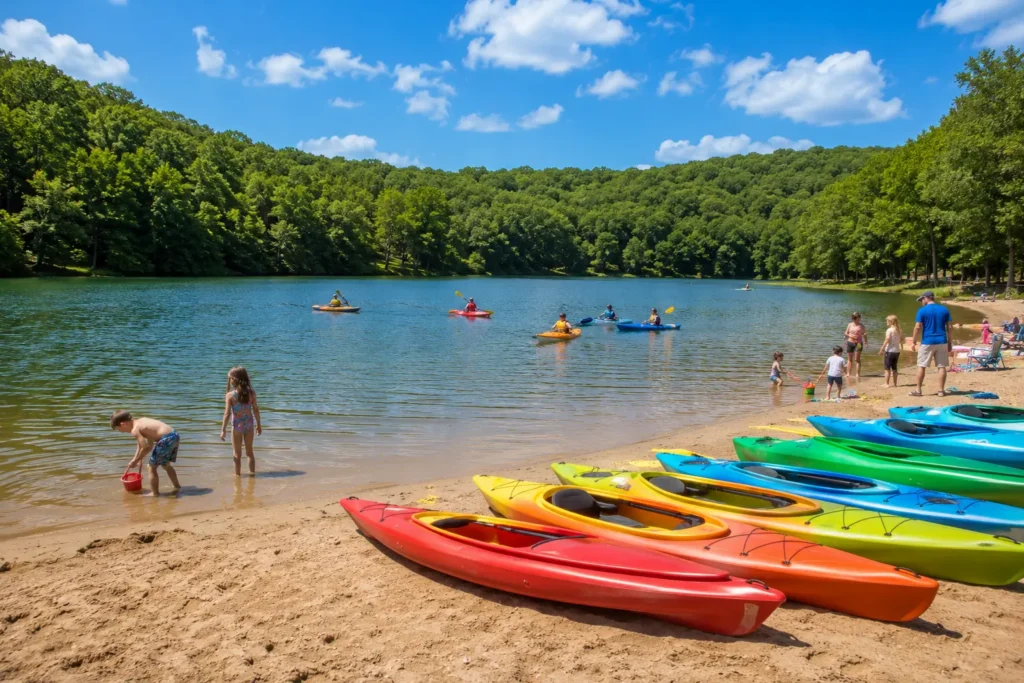
The northwest highlands of New Jersey sit roughly an hour from Midtown Manhattan. A family leaving Brooklyn, Hoboken, or Jersey City on a Friday afternoon can be lakeside, fire ring ready and kids heading toward the water, before dinner. Proximity isn’t a compromise here. For the NYC-origin traveler, it’s the feature that makes the weekend actually work.
The terrain in this part of the state is also genuinely different from what most people expect when they picture New Jersey. Sussex County sits in the Appalachian foothills. The NJ Skylands region is wooded, lake-studded, and hilly, flanked by Kittatinny Valley State Park to the east and the Delaware Water Gap National Recreation Area to the west. The Appalachian Trail cuts through the highlands just miles from Andover. This is not the Turnpike and it’s not the shore. It’s the part of the state that consistently surprises first-time visitors.
The third factor is what actually changes the trip. Many glamping properties in the northeast offer land-only experiences: a canvas tent in a field, a yurt near a creek, a cabin in the pines. All pleasant options. But access to a private lake with kayaking, row boats, and fishing right on the property is a different category of stay entirely. You have built-in water activities, a sandy beach, and a reason to spend the whole day outside without getting in the car. That combination within an hour of New York City is rare.
What no gear actually means (And why it’s the whole point)
The first-time glamper’s real anxiety isn’t the price. It’s the fear of showing up underprepared and ruining the weekend.
So here’s the actual packing list for a fully equipped cabin stay: clothes for the trip, food if you plan to cook, and toiletries. A packed car, not a loaded gear shed. What’s already at the cabin? A real mattress. A kitchen with a refrigerator and full-size range. A charcoal grill and fire ring outside. Picnic table, outdoor seating, electricity throughout. Air conditioning for the July nights when you’ll want it.
One practical detail worth knowing before you book: linens are typically not provided at campground-style cabin stays. Bring one set of sheets, a pillowcase, and a light blanket and you’re genuinely set. One bag, not twelve.
If you’ve never camped in your life and have no plans to start, a well-equipped cabin at a resort is the right entry point. You get the lake, the fire, the wooded air, and the stars, and you sleep in an actual bed. Nobody’s handing out merit badges for doing it differently.
What separates a glamping resort from a nice cabin in the woods
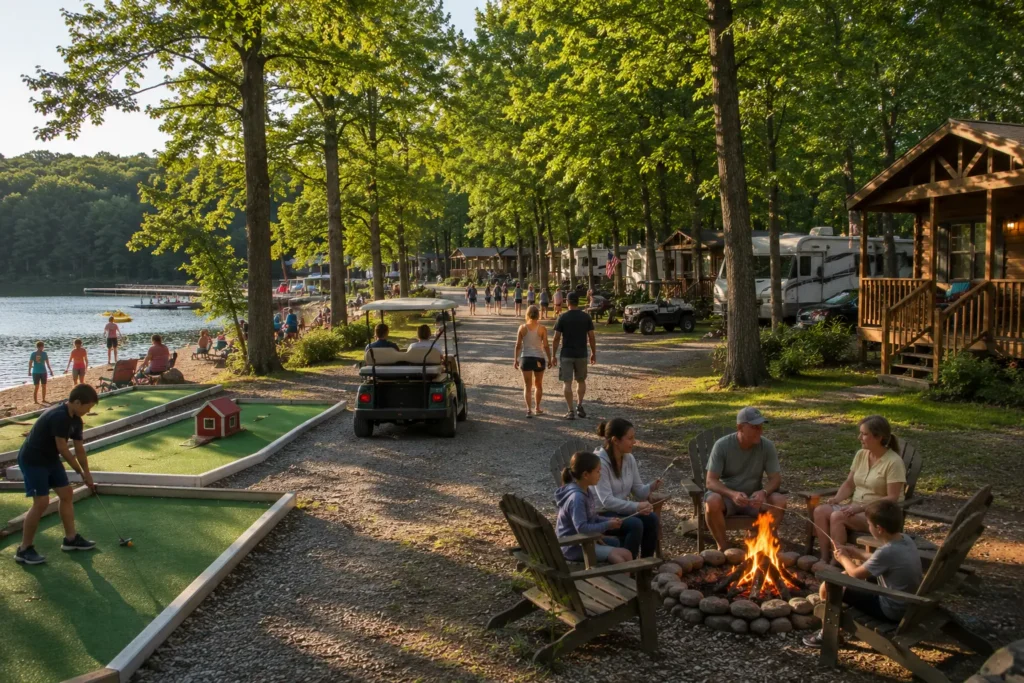
A standalone cabin is a structure in a setting. A glamping resort is a program built around a setting. That distinction is minor on paper and significant on the actual trip.
At a standalone cabin booked through Airbnb, Hipcamp, or a boutique listing site, the accommodation itself is the experience. The cabin is yours, the setting is beautiful, and how you fill the hours is entirely up to you. For people who want quiet and privacy and self-direction, that’s a perfectly good trip.
A resort works differently. It has multiple accommodations, a managed activity calendar, on-site infrastructure, and a range of facilities across the property. The experience isn’t only what’s inside your cabin. It’s what’s happening around you from the moment you check in.
Three differences that matter in practice:
An activity calendar. A standalone cabin doesn’t have one. A resort does. For families especially, what will we actually do for 48 hours? has a built-in answer at a resort that a private cabin simply can’t provide.
Social structure. Resorts build community moments: welcome events, communal gathering spaces, and programming that give guests a natural reason to step outside the cabin. At a standalone property, that’s entirely on you to create.
On-site amenities. A general store, equipment rentals, lake facilities, and activity staff are resort features, not cabin features. At a boutique glamping property, you drive somewhere when you need something.
At Panther Lake Camping Resort in Andover, NJ, the resort features span 160 wooded acres and a 45-acre private lake. The property schedules more than 20 named, themed weekends each season: Pirate Weekend, Mardi Gras, Dr. Seuss Weekend, Hawaiian Night, and others, with live bands booked for each event. Every Friday, there’s a Welcome Bonfire where guests who arrive that day can meet each other. Check the full activities calendar before picking a weekend.
For families, the calendar answers the question before it gets asked. For a couple booking around a specific event, the trip has a reason to exist beyond we needed to get out of the city, which matters more than most people admit on a tired Friday afternoon.
Golf cart rentals let guests move between cabins, the lake, activity areas, and the on-site store without a hike between every stop. That kind of operational infrastructure is simply not part of a standalone cabin booking.
Choosing your stay: A quick framework
Not every glamping trip looks the same, and the right cabin depends on who’s coming and what they actually need. A few practical frames before you browse:
| Your situation | What to prioritize |
| First time glamping, want to ease in | An entry-level furnished cabin with the essentials covered. Low commitment. See if you love it before upgrading. |
| Family of five or six | Private bathroom and separated sleeping zones matter more than square footage here. |
| Want it to feel like a real vacation | Upper-tier cabins with full kitchens and dedicated outdoor living space. Sunday morning coffee at the fire ring feels genuinely different at this level. |
| Bringing a dog | Pet-friendly sites and select cabin categories are available. Confirm specifics when you book. |
| Booking around a specific event weekend | Lock the event date first, then pick the cabin. Popular themed weekends fill earlier than most guests expect. |
When to go: Glamping Season in northern NJ
Panther Lake’s season runs from April 15 through October 31. Each window is different, and the fall window gets underbooked for no good reason.
Spring (April to May): Quieter weekends, off-peak rates, and the Skylands region is recovering from winter in a way that actually looks good. A strong first-trip window, especially for families who want to ease in without summer crowds.
Summer (June to August): The full activity calendar is running. Themed weekends are at their densest, the lake activities are all live, and evenings around the fire ring feel like summer is supposed to feel. Book early. Event weekends fill faster than guests plan for.
Fall (September to October): The most underestimated window. Sussex County foliage is legitimately impressive, cooler nights make campfires significantly better than any July evening, and the resort isn’t empty. Fall events fill a real portion of the calendar. If you’ve been putting off booking since spring, this is where you stop doing that.
The part most people skip
Glamping isn’t about picking the most exotic structure or the highest price point. It’s about showing up somewhere where the experience is already waiting: the outdoor setting, the activity calendar, the social infrastructure, the reason to be there. No gear. No setup. No uncertainty about whether the kids will have anything to do for 48 hours.
Northern New Jersey’s highlands have been a quiet kind of destination for years. Most people from the city just hadn’t looked yet.