

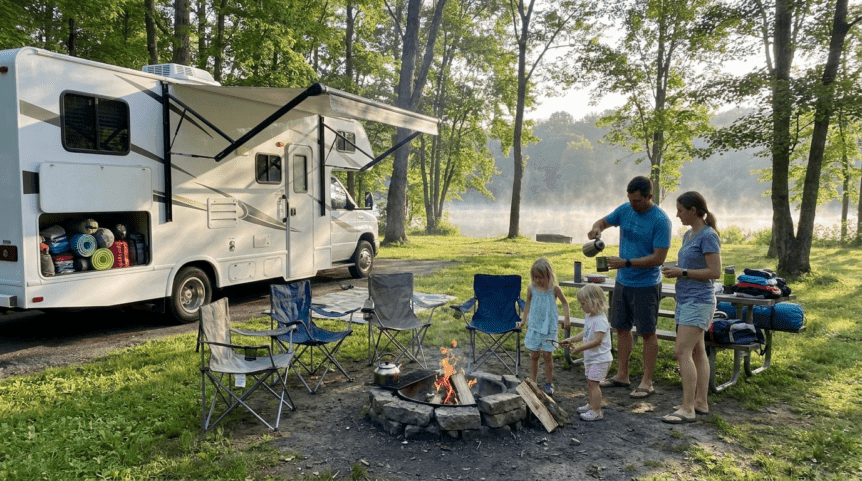
Spring camping season feels easier when the planning matches the season. Families usually run into trouble when they pack for a simple sunny weekend and forget that spring brings changing temperatures, damp ground, muddy entry points, cooler nights, and gear that has been sitting untouched all winter. A trip may only last a few days, but the comfort of that trip depends on a few decisions made before the car is loaded.
That is why a spring camping guide should focus on preparation, not just inspiration. Families need to know what to check before the first trip of the season, how to pack without overpacking, how to keep the campsite dry and organized, what meals work best in early-season conditions, and how to structure the day so the trip feels manageable for everyone. When those pieces are handled properly, spring camping stops feeling unpredictable and starts feeling like the kind of reset families actually want after winter.
Understand what makes spring camping different before you start planning
Spring camping is not just summer camping with an extra sweatshirt. The season changes too much throughout the day for that approach to work. Mornings can feel cold and damp, afternoons can feel comfortable, and evenings can drop back down fast once the sun goes. Even when the weather forecast looks good, the ground can still stay soft or wet from recent rain, and that affects the way the whole campsite functions.
This matters because most spring camping problems are not dramatic problems. They are small, annoying problems that pile up. Wet shoes end up everywhere. A child gets cold after sunset because daytime clothes were packed instead of layered clothes. The tent setup feels uncomfortable because no one planned for ground moisture. Dinner takes too long because the meal plan was built for a warm-weather day. Spring camping usually goes well when families plan for these details early instead of trying to fix them after arrival.
Plan the trip first, then build the packing list around it
The most useful spring camping plan starts with the shape of the trip. Families should decide how long they are staying, how much setup effort they want, what kind of daily pace feels realistic, and what they will do if the weather shifts for a few hours. Those decisions make the packing list clearer because they tell you what kind of trip you are actually building.
It also helps to lock in dates early, because timing affects everything from temperature expectations to the type of setup that will feel easiest. If you are planning a New Jersey spring trip, checking current availability early helps the rest of the trip take shape without guessing around dates that may not work. Once the trip window is clear, the planning becomes more practical and less scattered.
Choose the setup that makes spring camping easier for your family
Spring camping feels very different depending on how much setup your family wants to manage. Some families want the easiest possible arrival, less gear handling, and more comfort during cool mornings and evenings. Other families already have a routine they trust and prefer bringing their own setup because it gives them more flexibility once they get there.
That is why choosing between cabin stays and RV stays should be based on effort, comfort, and family rhythm instead of what sounds better in theory. Cabin stays usually work better for families who want to keep the trip simpler from the start, especially when the weather is still shifting. RV stays usually work better for guests who already know their system and want the comfort of bringing their own familiar setup into the season.
Check winter-stored gear before the first trip of the season
The first spring trip should never be the first time the gear gets touched. Tents, lanterns, sleeping bags, camp stoves, air mattresses, rain jackets, folding chairs, and power banks often sit in storage long enough for small problems to show up without warning. Zippers stick, batteries die, poles crack, fuel runs low, and children’s gear no longer fits the way it did last season.
A proper spring gear check saves far more time than it takes. Set up the tent if you are using one. Test the lights. Check the stove. Inflate the sleeping gear. Make sure rain layers still fit and still keep moisture out. If you want a second reference point while checking bags and essentials, a detailed packing guide can help you compare your spring setup against the practical basics that are easiest to forget.
What to pack for spring weather, damp ground, and cooler nights
Spring camping packing should be built around comfort across the full day, not just the warmest few hours. Families usually need clothing that can handle a cool breakfast outside, a mild afternoon, and a colder evening without forcing everyone to change completely every time the temperature shifts. A practical spring packing list should include:
- Short-sleeve shirts for milder afternoon weather
- Long-sleeve shirts for cooler mornings and evenings
- Fleece jackets or hoodies for easy mid-layer warmth
- A light, insulated outer layer for colder parts of the day
- A waterproof jacket or rain shell for sudden showers or damp conditions
- Extra socks, because wet or muddy ground can make spring trips uncomfortable fast
- Shoes that can handle soft, damp, or muddy ground without soaking through too easily
Nighttime comfort needs the same level of attention. Spring afternoons often feel warm enough to make families assume the evening will stay comfortable, but temperatures usually drop much faster after sunset. Children feel that shift even more, especially if their daytime clothes became damp or sweaty earlier in the day. To keep the night setup comfortable, pack:
- Dry sleepwear is packed separately from daytime clothing
- Extra blankets for each sleeper
- Sleeping bags that can handle cool spring nights
- Insulated sleeping pads or layered bedding to keep cold air from coming up through the ground
- One fully dry backup outfit for each child in case daytime clothes get wet
Spring camping usually feels much easier when the sleeping setup becomes one of the warmest and driest parts of the trip, not the part everyone struggles through after dark.
Set up the campsite so it stays dry, organized, and easy to manage
A spring campsite should be planned for function before appearance. Ground moisture, muddy shoes, layered clothing, and damp towels can make a site feel chaotic quickly if there is no clear system for where things go. The simplest way to avoid that is to create one entry area for wet gear, keep sleeping areas protected from ground moisture, and separate dry items from anything that is likely to get damp during the day.
Families also benefit from thinking about movement inside the campsite. Jackets should be easy to grab when the air cools down. Lights should be ready before sunset instead of buried in a bag. Dry clothes should stay together, not scattered between bins. Small practical items such as a towel at the entrance, a plastic bin for wet shoes, and a separate bag for dirty laundry do more for spring comfort than most people expect.
Use the season itself to choose the right trip timing
Spring does not feel the same from start to finish. Early spring often brings colder starts, softer ground, and more adjustment-heavy packing. Later spring usually feels easier for longer outdoor stretches and lighter daytime comfort. Families who understand that difference tend to plan better because they stop treating the entire season like one predictable weather window.
If you want a clearer sense of how spring fits into the larger camping year, this seasonal guide gives useful context for comparing spring with the rest of the New Jersey camping season. That kind of timing context is especially helpful for families trying to decide whether they want an earlier reset trip or a later spring weekend with slightly easier conditions.
Plan meals that match spring weather
Food has a bigger effect on spring camping comfort than many people realize. A meal plan that feels easy in warm weather can feel tiring in cool, damp conditions. Families usually do best when spring meals are warm, simple, filling, and quick to cook without creating a long cleanup routine at the end of the day.
Breakfast should help everyone warm up and get moving. Dinner should feel reliable instead of ambitious. Oatmeal, eggs, soup, pasta, chili, grilled sandwiches, rice bowls, and hot drinks usually work well because they match the season and do not add unnecessary stress to the trip. Spring camping becomes much easier when the meal plan reduces effort instead of becoming another task that has to be managed carefully at camp.
Keep the day structured enough to stay flexible
Spring camping days usually feel better when the pace has shape but not pressure. Most families do well with slower mornings, more active late-morning or afternoon time once temperatures rise, steady snack breaks, and a simpler evening wind-down once the air cools off again. That kind of rhythm makes the trip feel organized without making it rigid.
This also helps when the weather shifts for a short stretch. Families do not need a fully scheduled itinerary, but they do need enough structure that a rainy hour or cool stretch does not make the whole day feel off track. A practical daily rhythm creates room for adjustments, and that is exactly what spring trips need most.
Choose family activities that fit cooler, more flexible spring days
Spring activities work best when they match the season’s pace. Families usually get more out of trips when they plan for activities that can stretch or shrink depending on the conditions. Nature walks, birdwatching, scavenger hunts, fishing, outdoor sketching, short hikes, and quiet campfire time tend to fit spring better than activities that require perfect heat, dry ground, or a tightly packed full-day schedule.
If children are part of the trip, it also helps to keep a few low-pressure options ready for slower parts of the day. These camping activities for kids are useful because they add variety without making the trip feel overplanned. That balance matters in spring, when a family usually needs both movement and flexibility instead of a nonstop activity list.
Know the campground features that make spring trips easier for families
Not every spring trip feels easier just because the packing list is better. The place itself also matters. Families usually have a smoother experience when the campground supports the way they actually travel, especially in early-season conditions. Easy-to-use facilities, outdoor areas that feel family-friendly, and enough built-in options to keep the day moving all make a difference once the trip begins.
That is why it helps to look beyond the campsite alone and consider the family-friendly amenities available on the property. For spring trips, those practical supports often matter more than people expect because they reduce the amount of work parents have to do to keep the day comfortable, active, and manageable for everyone.
Avoid the spring camping mistakes that make the trip harder than it should be
The most common spring camping mistake is planning around the warmest part of the day and ignoring everything else. That usually leads to cold evenings, wet gear, and clothing that looked fine at lunch but feels wrong by dinner. Another common mistake is skipping the gear check, which turns small equipment problems into campsite frustration. Families also make the trip harder when they overcomplicate meals, fail to separate wet gear from dry gear, or assume children will stay comfortable without one fully dry backup outfit packed and ready.
Spring camping usually goes better when the basics are done well. Dry sleep clothes, extra socks, accessible rain gear, tested lights, simple meals, and a clear wet-gear system solve more problems than overpacking ever will. The families who enjoy spring trips most are usually the ones who treated preparation as part of the comfort plan, not as a last-minute chore.
Final spring camping checklist before you leave home
Before leaving home, do one last check to make sure the trip plan still fits the actual conditions. Spring weather changes quickly, and a final review can prevent the small mistakes that usually create the most frustration after arrival. Before you head out, confirm:
- The weather forecast has been checked one last time
- The gear has been tested and is ready to use
- clothing layers are packed for cool mornings, mild afternoons, and colder evenings
- The sleep setup is warm enough, even if daytime temperatures feel comfortable
- Meals are simple and realistic for spring conditions
- Snacks are packed and easy to reach
- Flashlights, lanterns, or headlamps have working batteries
- Rain gear is packed where it can be reached quickly
- Each child has one full dry backup outfit packed together in one place
Plan Your Spring Getaway at Panther Lake Camping Resort
Once the seasonal planning is handled, the final step is choosing a place that fits the kind of family trip you are trying to create. Panther Lake Camping Resort is a strong fit for spring travelers who want outdoor time, flexible stay options, and a family-friendly setting that feels easier to manage than a more demanding trip. Instead of forcing the trip to revolve around logistics, you can use the planning steps above to build a weekend that already has the basics covered before you arrive.
If you are ready to turn this spring camping plan into a real trip, Panther Lake Camping Resort is a practical next step. Book early, choose the stay style that fits your family best, and start the season with a getaway that feels organized, comfortable, and worth repeating.
FAQs
What is the most important part of spring camping planning?
The most important part is planning for changing conditions instead of ideal conditions. Families should prepare for cooler mornings, damp ground, temperature shifts, and the need for flexible clothing and campsite organization.
How should families pack clothes for spring camping?
Families should pack in layers that are easy to adjust throughout the day. Long sleeves, warm mid-layers, waterproof outerwear, extra socks, and separate dry sleep clothes usually matter more than packing one heavy cold-weather item.
Why does spring camping need a different setup than summer camping?
Spring conditions create more variation in temperature and ground moisture. That means campsite setup, sleep comfort, meal planning, and gear organization need more attention than they usually do in summer.
What kinds of meals work best for spring camping?
Warm, simple meals work best because they match the season and reduce effort. Families usually do well with food that is easy to cook, easy to clean up, and filling enough for cooler weather.
What is the most common mistake families make on spring camping trips?
The most common mistake is packing for the best part of the forecast and ignoring the rest of the day. That usually creates problems with cold evenings, wet gear, and a campsite that feels harder to manage than expected.