

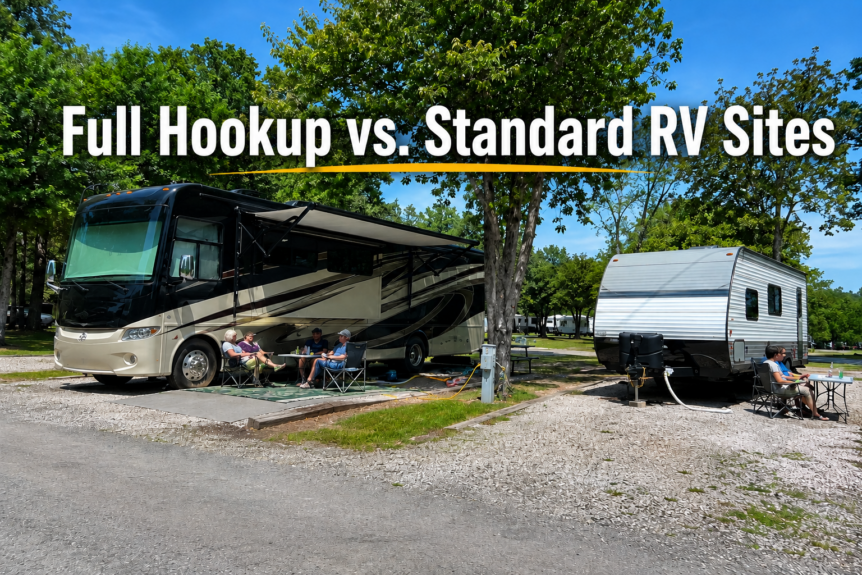
A full hookup RV site gives you water, electric, and sewer connections right at your campsite. A standard or partial hookup site usually drops the sewer connection, leaving you with water and electric only. At Panther Lake Camping Resort, that difference shows up in three specific site types: WEC 30, Deluxe Full 30, and Deluxe Full 50, each built for a different kind of trip.
That sounds simple enough until you start comparing campgrounds and the terms stop lining up. Here’s what each type actually means once you look past the label.
What’s included in a full hookup RV site
A full-hookup site connects your RV to a continuous water supply, an electric pedestal, and a sewer line. In practice, that means you can shower as long as you want, run the faucet while doing dishes, and flush without doing tank math in your head. It’s the setup that lets your RV work the way your house does.
Water, electric, and sewer: The big three
The sewer connection is the piece that changes daily life the most. It lets gray water (sinks, showers) and black water (toilet) drain as you go, instead of filling a tank you have to manage. Add a direct water line and steady power, and you’ve got the three utilities campers mean when they say full hookup.
30-amp vs. 50-amp: Which one does your rig need
Full-hookup sites typically come in two electrical configurations. A 30-amp connection covers most smaller to mid-size RVs: lights, a microwave, one air conditioner, and the basics. A 50-amp connection gives you two separate 120-volt legs, which means you can run multiple high-draw appliances, like two AC units, the microwave, and the water heater, at the same time without tripping a breaker.
What a standard RV site leaves out
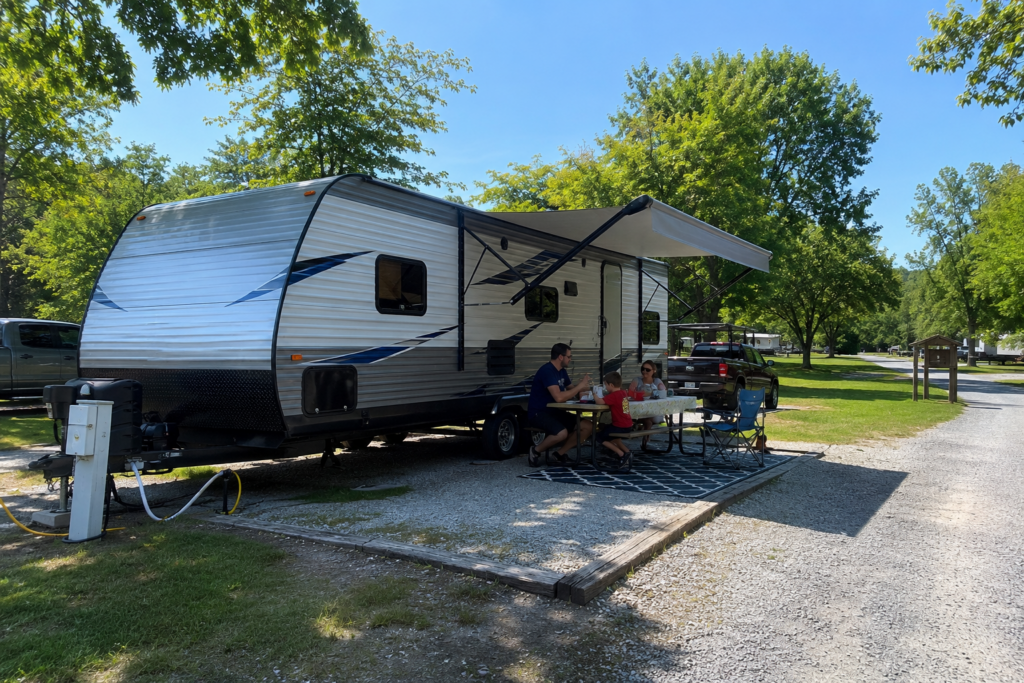
The missing piece in a standard or partial hookup site is almost always the sewer connection. You still get water and power, but your gray and black tanks fill up the same way they would if you weren’t hooked up to anything. For a one-night stop, that’s rarely a problem. For a longer stay, it matters a lot sooner than most first-time RVers expect.
How fast does a family of 4 actually empty a freshwater tank
Most RV freshwater tanks hold somewhere between 40 and 60 gallons. That sounds like plenty until real usage comes into play. A family of four running showers, washing dishes after meals, and using the bathroom regularly can burn through a 50-gallon tank in a day or two, sometimes faster if anyone runs a load of laundry or lets a shower run a little long.
A couple traveling light and conserving water can often stretch the same tank across three or four days. Trip length and family size, not the campground’s label, are what actually decide whether a standard site is enough.
Managing the gray and black tanks without a sewer hookup
Without a sewer connection, both tanks fill up right alongside your water usage, and you’ll need to move your RV to a dump station once they get close to full. Most campgrounds with standard sites have one on the property, so it’s rarely a long drive. It’s just one more stop to plan for, and it’s the main tradeoff you’re making in exchange for a lower nightly rate.
Why does a standard RV site mean something different at every campground?
Here’s the part that trips up even experienced RVers: standard isn’t an industry-wide term. One campground offers only water and electric. Another use is to describe a smaller or less shaded site that still has decent hookups. A third uses it as a catch-all for anything that isn’t their premium tier. There’s no rulebook that forces every campground to use the word the same way.
That’s why the better question isn’t whether this site is standard. What hookups does this site include? If a park lists categories by name, like full hookup, water/electric, or dry, you can place standard somewhere inside that range. If a park uses its own branded names instead, you need to look past the label and check the specifics: water, electric, sewer, and amperage.
The three real categories: Full hookup, partial hookup, and no hookup
Underneath all the different naming conventions, there are really only three setups:
- Full hookup: water, electric, and sewer connected directly at your site.
- Partial hookup: usually water and electric, but no sewer. This is what most campgrounds mean by standard.
- No hookup: also called dry camping or boondocking. You rely entirely on your RV’s own tanks and battery power.
Once you know which of these three you’re actually looking at, the campground’s own naming stops mattering as much.
RV site types at Panther Lake Camping Resort
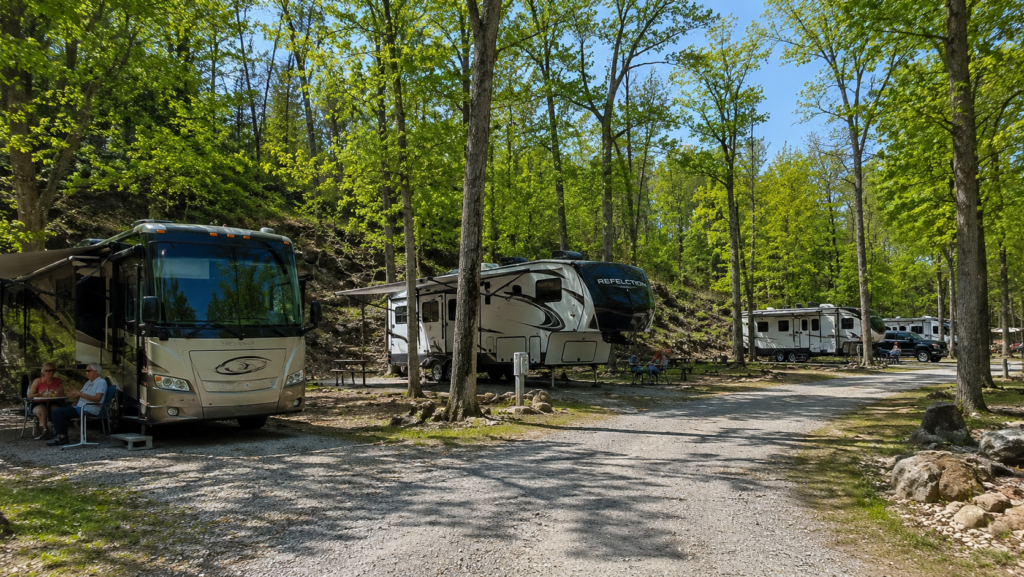
Panther Lake doesn’t sell a single flat full-hookup product. There are three distinct site types, and picking between them comes down to your rig’s amperage and how much you want to think about your tanks during the stay.
Wec 30: Water, electric, and cable
WEC 30 gets you water, 30-amp electric service, and cable TV at your site. There’s no sewer hookup here, so you’ll use the on-site dump station when your tanks need emptying. It’s the closest thing Panther Lake offers to the standard site described earlier in this article, with one extra: a cable connection that most competitors don’t even mention in a hookup conversation.
Deluxe full 30: Full hookup at 30-amp
Deluxe Full 30 adds the sewer connection to the water and electric setup, giving you the complete big three at 30-amp service. This is the site type for anyone who wants to run their RV like a home: dishes, showers, and bathroom use without a second thought, but who doesn’t need 50-amp power.
Deluxe full 50: Full hookup at 50-amp
Deluxe Full 50 is the same full hookup setup as Deluxe Full 30, just with 50-amp electric service instead of 30. If your rig runs two air conditioning units or you know you’ll be pulling more power than a 30-amp connection comfortably handles, this is the tier built for that.
Which RV site fits your trip
The right site usually comes down to how many people are traveling and how long you’re staying, more than anything else. A couple in a smaller trailer for a one- or two-night weekend rarely stresses a 40- to 60-gallon water tank, so WEC 30 covers that trip comfortably, with the cable connection as a nice bonus for a low-key stay.
A family of four staying three nights or longer is a different story: kids alone can push daily water use past what a shorter trip would use, and once you add dishes, showers, and regular bathroom trips on top of that, Deluxe Full 30 or Deluxe Full 50 becomes the more comfortable choice.
FAQs For Full Hookup vs. Standard RV Sites
What’s the actual difference between a full hookup and a standard RV site?
A full hookup site gives you water, electric, and sewer right at your campsite. A standard site, sometimes called a partial hookup, usually gives you water and electric but not sewer, so you’ll use a dump station instead.
Is a full hookup site worth the extra cost for a weekend trip?
For a quick one- or two-night stay with a small rig, a standard site is often enough. For a family staying multiple nights, or anyone who wants to run the AC, do dishes, and shower without watching the tank gauge, full hookup pays for itself fast.
What’s the difference between WEC 30, Deluxe Full 30, and Deluxe Full 50 at Panther Lake?
WEC 30 includes water, electric, and cable, without a site-level sewer connection, so you’ll use the on-site dump station. Deluxe Full 30 and Deluxe Full 50 both include full hookups with sewer; the difference between them is amperage, 30-amp versus 50-amp.
How do I know if I need 30-amp or 50-amp service?
Most smaller to mid-size RVs run fine on 30-amp. If your rig has two air conditioning units or you regularly run multiple high-draw appliances at once, 50-amp gives you more headroom without tripping a breaker.
How much water does a family actually use without a full hookup?
A typical RV freshwater tank holds 40 to 60 gallons. A family of four using it for dishes, showers, and regular bathroom use can burn through that in a day or two, which is why longer family stays lean toward full hookup.